Backtesting Trading Strategies: Test Before You Trade (2026)
Backtesting Strategies: How to Know If Your Trading Idea Actually Works
Here's a question that trips up almost every new trader: you've got an idea — maybe buy when price crosses above the 50-day moving average, or short when RSI hits 80 — but how do you actually know if it works before risking real money on it? Do you just... try it and hope?
That's exactly the gap backtesting strategies fills. Instead of gambling your first few months of trading on an untested hunch, you run that same idea against years of historical data first, and let the numbers tell you whether it's worth pursuing at all — before a single real dollar is on the line.
What Is Backtesting?
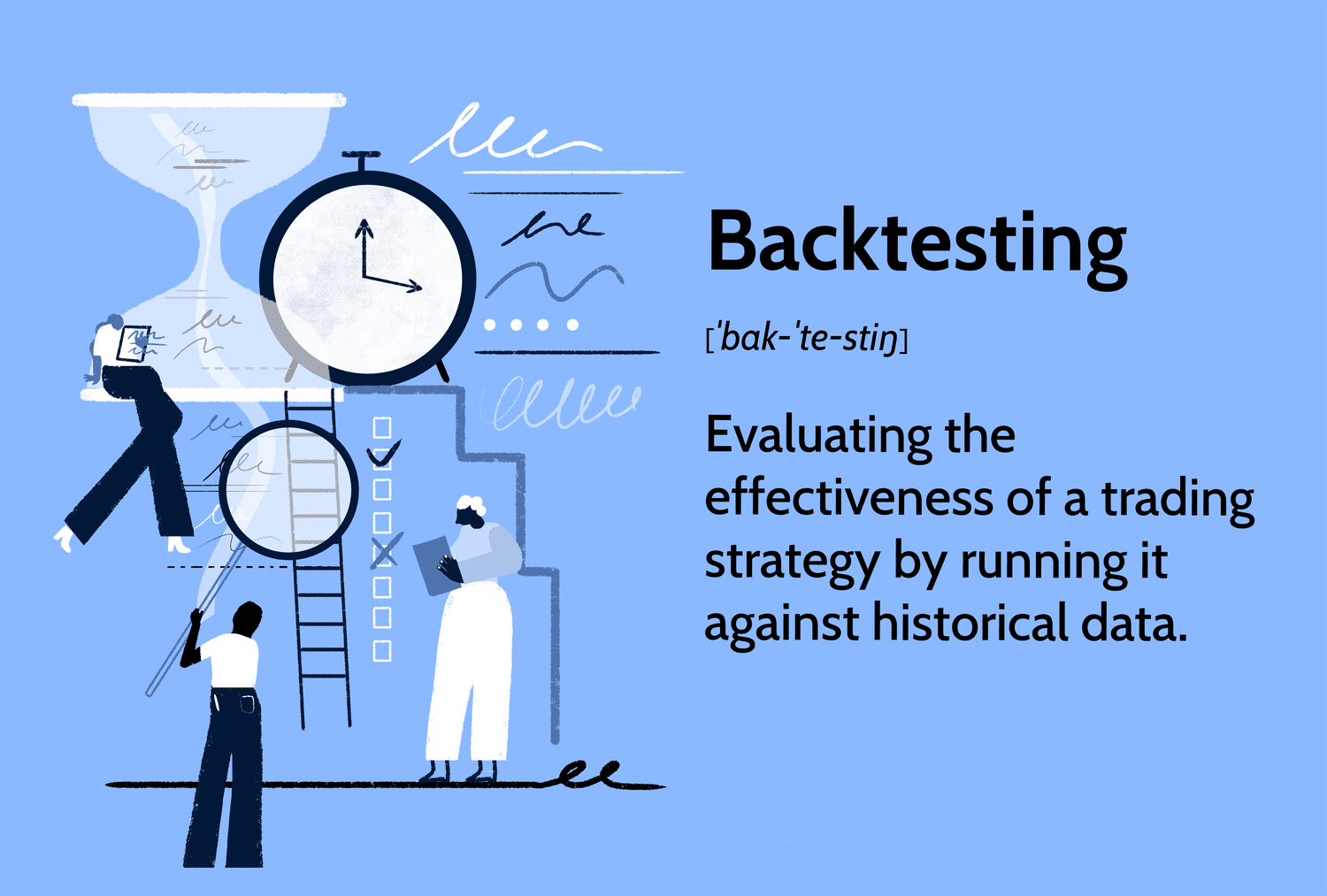
Backtesting is the process of applying a trading strategy's exact rules to historical price data to see how it would have performed in the past. You define your entry conditions, exit conditions, and risk rules, then run them mechanically against months or years of past prices to generate a track record — win rate, average profit, drawdowns, all of it — without risking a cent.
Think of it like a flight simulator for pilots. Nobody hands a brand-new pilot the controls of a real plane on day one. They practice thousands of scenarios in a simulator first, so mistakes happen safely, on data, before anything real is at stake. Backtesting strategy development works the same way for traders — it's where your idea gets stress-tested before it ever touches live capital.
The core promise here isn't certainty. Markets change, and no backtest guarantees future results. But it does answer a much simpler, more useful question: is there any historical evidence this idea has an edge at all, or is it just a story that sounds good?
Backtesting vs Forward Testing vs Live Trading
These three stages form a natural progression, and skipping any of them is where a lot of beginners get burned.
- Backtesting: Running a strategy against historical data to see how it would have performed in the past, using either manual chart review or automated software.
- Forward testing (paper trading): Running the same strategy in real time on a demo account, using live current data but without real money, to confirm it still behaves as expected outside of historical hindsight.
- Live trading: Trading the strategy with real capital, only after it's held up through both backtesting and forward testing.
If backtesting is studying old exam papers, forward testing is a practice exam under real time pressure, and live trading is the actual exam that counts. A solid backtesting for beginners approach never skips straight from studying old papers to sitting the real exam.
Best Tools and Approaches for Backtesting
Backtesting can range from a simple manual exercise to a fully automated process. Here's what shows up most often in effective technical analysis for backtesting work.
Manual Chart-by-Chart Backtesting
This involves scrolling back through historical charts candle by candle, marking where your strategy's rules would have triggered an entry and exit, and logging the outcome by hand. It's slow, but it builds an intuitive feel for how a strategy behaves that automated testing alone doesn't provide.
Backtesting Software and Platforms
Purpose-built backtesting platforms let you code your strategy's rules and run them automatically across years of data in seconds, generating statistics like win rate, average win/loss, and maximum drawdown instantly. This is where the best strategy for backtesting at scale really comes together, since it removes hours of manual chart-scrolling.
Spreadsheet-Based Backtesting
For simpler, rule-based strategies, historical price data can be pulled into a spreadsheet and formulas used to flag entry and exit signals automatically. It's more flexible than manual backtesting and doesn't require coding knowledge, making it a solid middle ground for many retail traders.
Walk-Forward Analysis
Rather than testing on one big historical block, walk-forward analysis breaks the data into multiple smaller segments, testing and re-optimizing on each one in sequence. This helps confirm a strategy's edge holds up across different time periods rather than being a fluke of one particular stretch of data.
Monte Carlo Simulation
This technique randomly reorders the sequence of a strategy's historical trades thousands of times to see how differently things could have played out — useful for understanding the realistic range of drawdowns a strategy might produce, not just the one specific path the original backtest happened to follow.
Risk Management Tips When Backtesting
A backtest is only useful if it's built honestly — otherwise it just produces a comforting number that has nothing to do with reality.
- Include realistic transaction costs. Spreads, commissions, and slippage all eat into returns; ignoring them makes almost any strategy look better than it really is.
- Test across different market conditions. A strategy that only looks great during a strong bull run may fall apart completely in a sideways or declining market.
- Use out-of-sample data. Reserve a portion of historical data you never touch during development, then test on it afterward to catch strategies that were unintentionally overfit to one specific dataset.
- Track maximum drawdown, not just average return. A strategy with great average returns but brutal drawdowns may be statistically profitable yet practically unbearable to actually trade.
- Size positions consistently with your live-trading risk rules. A backtest run at unrealistic position sizes tells you very little about how the strategy will behave with your actual account.
Common Mistakes Beginners Make
Backtesting looks simple on the surface, but a handful of recurring mistakes quietly invalidate a lot of beginner results.
- Overfitting the strategy to historical data. Tweaking rules repeatedly until the backtest looks perfect almost guarantees it won't perform the same way going forward.
- Ignoring transaction costs and slippage. A strategy that barely breaks even after realistic costs often looked wildly profitable in a cost-free backtest.
- Testing on too small a sample size. A handful of trades over a few weeks tells you almost nothing statistically meaningful about long-term edge.
- Using look-ahead bias by accident. Accidentally letting the backtest "see" information that wouldn't have been available at the time of the actual trade, inflating results artificially.
- Skipping forward testing entirely. Jumping straight from a good backtest to live trading with real money, without ever confirming the strategy behaves the same way in real time.
- Treating backtested results as guaranteed future performance. Markets evolve, and a strategy that worked well historically can lose its edge as conditions change.
Conclusion
Learning backtesting strategies properly is one of the most valuable skills a trader can build, because it replaces guesswork with evidence before any real capital is at risk. Build your rules clearly, test them honestly across different market conditions with realistic costs included, and always confirm results through forward testing before going live. Treat the whole process as ongoing — markets shift, and strategies need to be revisited rather than trusted blindly forever.
A good backtest won't promise you future profits. It will tell you, with real evidence, whether your idea deserves a chance at all.
Frequently Asked Questions
1. How much historical data should I use for backtesting?
Generally, the more the better — many traders aim for at least several years of data covering different market conditions, such as both trending and sideways periods, to get a more reliable picture of a strategy's true performance.
2. Do I need to know how to code to backtest a strategy?
Not necessarily. Manual chart review and spreadsheet-based backtesting work well for simpler strategies, though coding does make testing large datasets and complex rules significantly faster.
3. Why did my strategy perform well in backtesting but poorly in live trading?
This often comes down to overfitting, ignored transaction costs, or changing market conditions that didn't exist in the original historical data. It's exactly why forward testing before going live is so important.
4. How long should I forward test a strategy before trading it live?
There's no fixed rule, but many traders forward test for at least a few weeks to a couple of months, aiming to see a reasonable number of trades play out in real time before committing real capital.