Fear and Greed Trading: Why Market Emotions Move Prices More Than You Think
Fear and Greed Trading: Why the Market's Emotions Move Prices More Than You Think
Have you ever bought something right at the top, convinced it was about to explode higher, only to watch it crash the moment you clicked buy? Or sold in a panic during a dip, just before it ripped right back up? If so, congratulations — you've experienced the market's two favorite forces firsthand: fear and greed.
Fear and greed trading isn't some fringe theory. It's one of the most consistent, repeatable patterns in markets, precisely because the emotions driving it are baked into human psychology and don't change much from one generation of traders to the next. Learning to recognize these cycles — in the market and in yourself — is one of the most practical edges a trader can develop.
What Is Fear and Greed Trading?
Fear and greed trading refers to the idea that markets move in emotional cycles, swinging between euphoric optimism (greed) that pushes prices higher than fundamentals justify, and panicked pessimism (fear) that pushes prices lower than fundamentals justify. Traders who understand this cycle try to act opposite to the crowd's emotional extremes rather than getting swept up in them.
Think of it like a crowded party. When everyone's having a great time and the energy is contagious, it's easy to get swept up and stay later than you planned. When someone yells that something's wrong and people start rushing for the exits, it's just as easy to bolt without checking if there's actually a real problem. Markets behave the same way — greed keeps people buying past reasonable valuations, and fear pushes people selling past reasonable value, simply because everyone around them is doing it.
The famous saying attributed to Warren Buffett captures this perfectly: be fearful when others are greedy, and greedy when others are fearful. Easier said than done, but understanding why it works is the first step.
Fear and Greed Trading vs Fundamental Analysis vs Technical Analysis
It's worth separating this from the other two major approaches traders use, since it operates on a different layer entirely.
- Fundamental analysis: Focuses on an asset's actual economic value — earnings, growth, macroeconomic data.
- Technical analysis: Focuses on price patterns and chart behavior, regardless of underlying value.
- Fear and greed trading: Focuses on crowd psychology and emotional extremes — often used as a filter on top of the other two, flagging when the market's mood has detached from what the fundamentals or charts would normally suggest.
If fundamentals tell you what something is worth and technicals tell you where price is heading, fear and greed strategy tells you something different: how emotionally stretched the current move has become, and how likely it is to snap back.
Best Indicators and Tools for Reading Fear and Greed
You can't directly measure emotions, but markets leave plenty of clues. Here's what shows up most often in solid technical analysis for fear and greed trading.
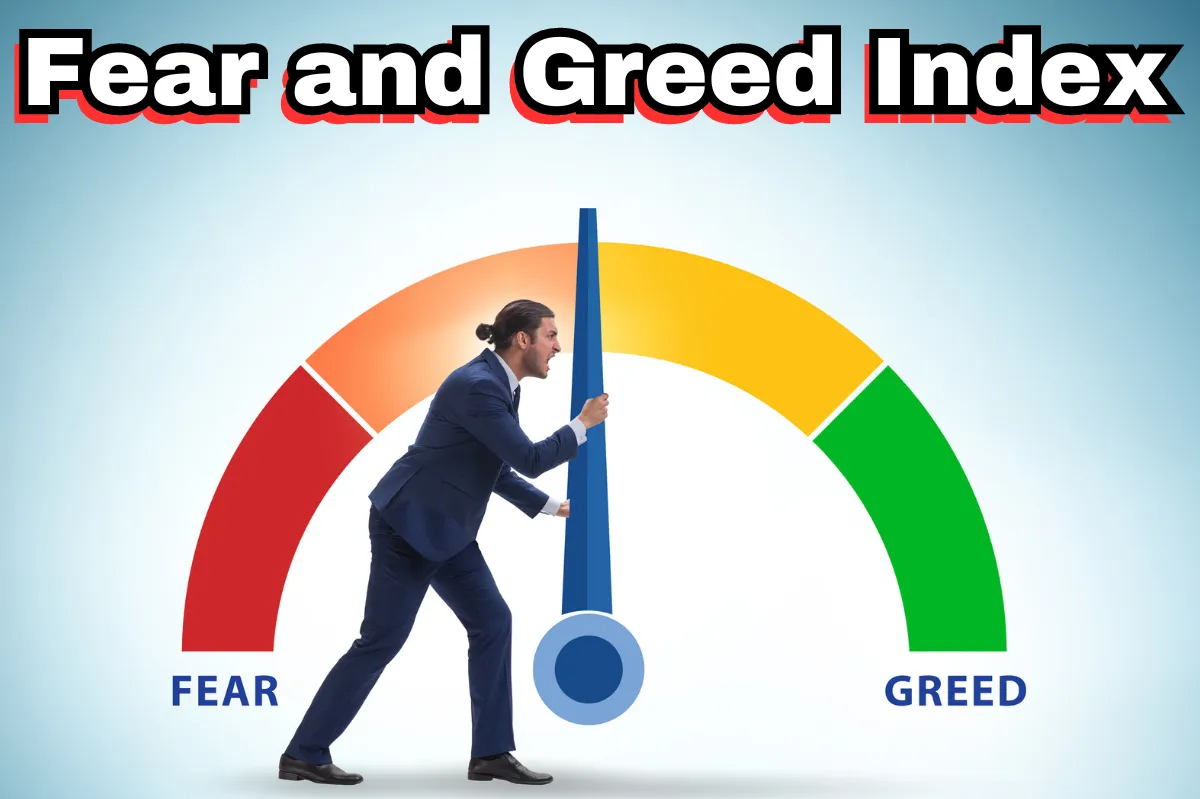
Fear and Greed Index
Several financial platforms publish a Fear and Greed Index, blending factors like market volatility, momentum, put/call ratios, and safe-haven demand into a single score from "extreme fear" to "extreme greed." It's not a precise timing tool, but extreme readings often coincide with meaningful turning points.
VIX (Volatility Index)
Often nicknamed the market's "fear gauge," the VIX tends to spike sharply during panic-driven selloffs and stay low during complacent, greed-driven rallies. A sudden VIX spike is frequently a sign that fear has taken over short-term sentiment.
RSI at Extreme Levels
While normally used as a general momentum tool, RSI readings pushed deep into overbought or oversold territory across a broad market (not just a single stock) can reflect crowd-wide greed or fear rather than a single asset's story.
Put/Call Ratio
This measures how many investors are buying protective puts versus speculative calls. A heavily skewed ratio toward puts often signals fear dominating sentiment, while a skew toward calls often signals greed and complacency.
Volume and Volatility Spikes
Among the best indicators for fear and greed trading, sudden spikes in volume paired with sharp price swings are one of the most visible fingerprints of emotional trading — calm, orderly markets rarely move that fast in either direction.
Risk Management Tips for Trading Against the Crowd
Trading against prevailing emotion is uncomfortable by design — here's how to do it without taking reckless risk.
- Never try to catch the exact bottom or top. Extreme fear can get more extreme, and extreme greed can run further than seems rational. Scale into positions rather than going all-in at once.
- Combine sentiment extremes with technical confirmation. An extreme fear reading paired with a clear support level or reversal pattern is a stronger signal than sentiment alone.
- Use smaller position sizes when trading against the crowd. Contrarian trades carry real risk of being early, so size accordingly until price confirms the turn.
- Set a hard invalidation point. Decide in advance what would prove the contrarian thesis wrong, and honor that stop-loss without exception.
- Be honest about your own emotional state. If you're feeling the same fear or greed as the crowd, that's often the moment discipline matters most, not less.
Common Mistakes Beginners Make
Understanding fear and greed in theory is one thing — actually trading around it calmly is another. Here's where beginners usually stumble.
- Confusing "contrarian" with "reckless." Betting against a strong trend simply because it feels stretched, without any real confirmation the move is actually ending.
- Chasing greed-driven rallies late. Jumping into a trade only after seeing everyone else's excitement, right as the move is running out of steam.
- Panic-selling during fear-driven drops. Exiting a sound position purely because of falling prices and rising noise, without reassessing whether the original thesis actually changed.
- Ignoring their own emotional signals. Not recognizing when their own decision-making is being driven by fear or greed rather than their trading plan.
- Treating sentiment indicators as precise timing tools. Extreme readings can persist far longer than expected — sentiment shows stretch, not an exact turning point.
- Overexposing on a contrarian conviction. Going too big on a single "everyone's wrong but me" trade, rather than sizing for the real possibility of being early.
Conclusion
Fear and greed trading for beginners starts with a simple mental shift: the crowd's emotion is information, not instruction. Extreme fear often creates opportunity precisely because prices have overshot to the downside, and extreme greed often creates risk precisely because prices have overshot to the upside. The skill isn't predicting the exact moment sentiment turns — it's recognizing when emotion has taken over, staying calm enough to act with a plan instead of a feeling, and managing risk carefully in case the crowd stays irrational longer than expected.
Markets aren't purely rational, and they never will be. Traders who learn to read the emotional tide — without getting pulled under by it — tend to end up on the right side of it far more often than those who don't.
Frequently Asked Questions
1. Is the Fear and Greed Index a reliable trading signal on its own?
It's better used as one input among several rather than a standalone signal. Extreme readings highlight stretched sentiment, but combining them with technical or fundamental confirmation tends to produce more reliable results.
2. How do I know if I'm trading on fear or greed myself?
Common signs include making decisions that deviate from your written trading plan, feeling urgency to act immediately, or noticing your position sizing has grown without a clear reason tied to your strategy.
3. Does fear and greed trading work in all markets?
The underlying psychology tends to show up across stocks, forex, crypto, and commodities alike, since it's rooted in human behavior rather than any single market's structure — though how extreme the swings get can vary by market.
4. Is contrarian trading the same thing as fear and greed trading?
They're closely related but not identical. Fear and greed trading is about reading emotional extremes broadly, while contrarian trading specifically means positioning against the prevailing crowd sentiment once those extremes are identified.