Forex Trading for Beginners: The Complete Step-by-Step Guide

Forex Trading for Beginners: The Complete Step-by-Step Guide
📋 Table of Contents
Every single day, over $7.5 trillion changes hands in the foreign exchange market — making it the largest and most liquid financial market on the planet. Banks, institutions, and individual traders around the world buy and sell currencies 24 hours a day, five days a week.
If you have ever wondered "what is forex trading" or "can I really trade currencies from home," this guide is your answer. We will walk you through everything — from the very basics of how currencies are traded, to setting up your first practice account — in plain, jargon-free English.
1. What Is Forex Trading?
Forex (short for Foreign Exchange) is the global marketplace where currencies are bought and sold. Unlike stocks or commodities, there is no central exchange — forex trades happen electronically over-the-counter (OTC) through a worldwide network of banks, brokers, and traders.
The concept is straightforward: you are speculating on whether one currency will rise or fall against another. If you believe the Euro will strengthen against the US Dollar, you buy EUR/USD. If it rises as predicted, you profit. If it falls, you take a loss.
What makes forex unique is its accessibility and flexibility. You can trade from anywhere in the world, with a relatively small starting capital, and the market is open from Sunday 5 PM EST to Friday 5 PM EST — nearly around the clock.
The forex market dwarfs every other financial market. The New York Stock Exchange handles roughly $25 billion per day — forex handles 300 times that amount.
2. How Do Currency Pairs Work?
In forex, currencies are always traded in pairs. You are simultaneously buying one currency and selling another. Every pair has two parts:
- Base Currency — the first currency in the pair (e.g. EUR in EUR/USD)
- Quote Currency — the second currency (e.g. USD in EUR/USD)
If EUR/USD = 1.0850, it means 1 Euro buys 1.0850 US Dollars. When you go "long" (buy) on this pair, you are betting the Euro will strengthen against the Dollar.
The Three Categories of Currency Pairs
- Major Pairs — involve the US Dollar. Most traded, lowest spreads. Examples: EUR/USD, GBP/USD, USD/JPY
- Minor Pairs — do not include USD but feature major currencies. Examples: EUR/GBP, AUD/JPY
- Exotic Pairs — one major currency + one from a smaller economy. Higher spreads, more volatile.
Stick to one or two major pairs when starting out. EUR/USD is the most traded pair in the world — tightest spreads, most analysis available, most predictable behavior.
3. Essential Forex Terminology
Before you place your first trade, you need to understand these core concepts. Bookmark this table — you will refer to it often.
| Term | What It Means |
|---|---|
| Pip | The smallest price movement in a currency pair — usually 0.0001 for most pairs |
| Lot Size | The volume of a trade: Standard = 100,000 units; Mini = 10,000; Micro = 1,000 |
| Leverage | Borrowed capital that amplifies your trade size — e.g. 1:100 means $1 controls $100 |
| Spread | The difference between the buy and sell price — this is how brokers earn |
| Margin | The minimum deposit required to open and hold a leveraged trade |
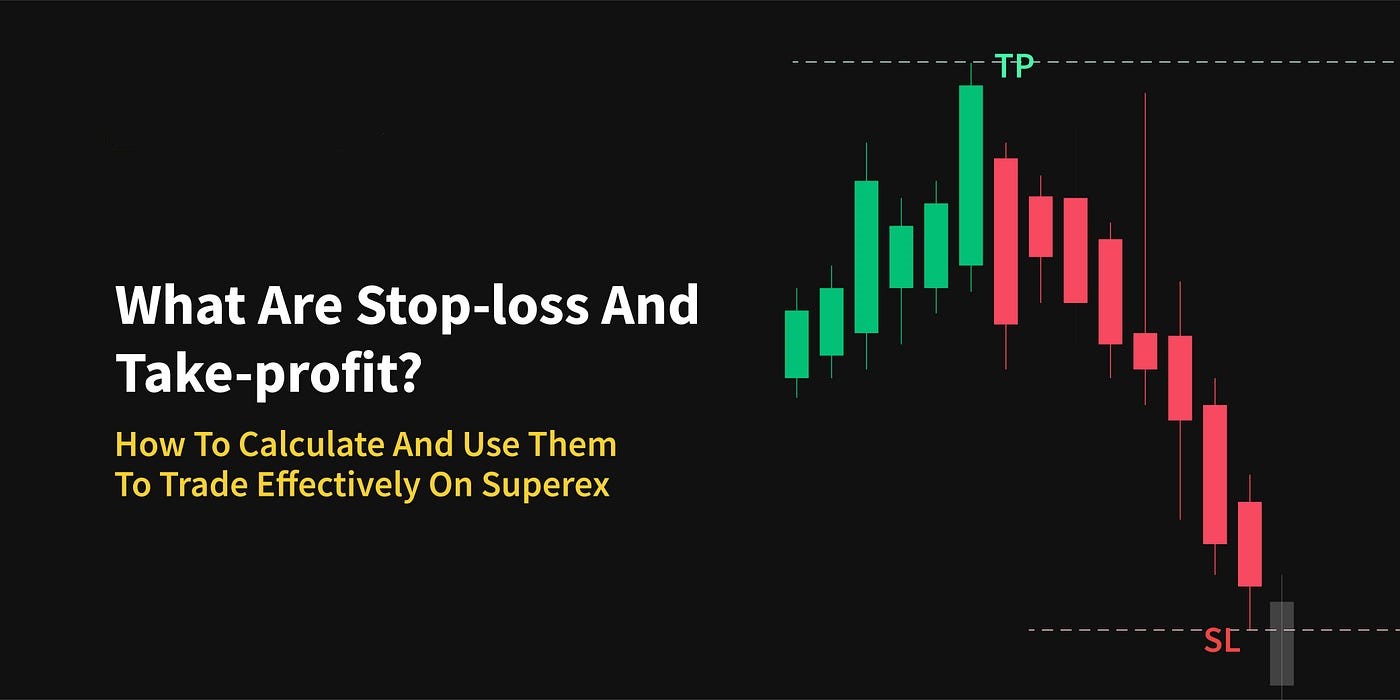
| Stop Loss | An automatic order to close your trade if losses reach a set level |
| Take Profit | An automatic order to lock in profits when price hits your target |
| Long / Short | "Long" = buying, expecting price to rise. "Short" = selling, expecting price to fall |
Leverage magnifies both profits AND losses. A 1:100 leverage means a 1% move against you wipes your entire margin. Most professional traders use 1:10 or lower. Always understand your exposure before opening a trade.
4. How to Start Forex Trading: Step by Step
Build Your Foundation First
Trading without education is gambling. Before risking a single dollar, invest time in learning technical analysis, fundamental analysis, and risk management. Free resources are everywhere — YouTube channels, trading blogs, broker academies, and demo platforms. Aim for at least 4–6 weeks of consistent study before touching real money.
Choose a Regulated Broker
Your broker is your gateway to the market — choosing the wrong one can cost you everything. Look for brokers regulated by top-tier authorities such as FCA (UK), ASIC (Australia), CySEC (Cyprus), or NFA (USA). Evaluate: minimum deposit, spreads, available instruments, platform quality, and withdrawal reliability.
Open a Demo Account and Practice
A demo account gives you real market conditions with virtual money. This is the single most important step for beginners. Do not skip it. Practice executing trades, setting stop losses, managing positions, and keeping a trading journal. Most traders should spend at least 3 months on demo before going live.
Start Live Trading with a Small Deposit
When your demo results are consistently profitable, open a live account with a small amount you can afford to lose entirely. Start with micro lots. Focus on execution quality and emotional discipline — not profit targets. Your first goal in live trading is capital preservation, not wealth building.
Never risk more than 1–2% of your total account on a single trade. On a $500 account, that is a maximum $10 risk per trade. This rule is non-negotiable among professional traders — it keeps you in the game long enough to get good.
5. Technical vs. Fundamental Analysis
Technical Analysis
Technical analysis involves reading price charts, patterns, and indicators to predict future price movements. Tools like RSI, MACD, Bollinger Bands, and Moving Averages help traders identify trends, momentum, and entry/exit points. It is the preferred approach for short-term and day traders.
Fundamental Analysis
Fundamental analysis focuses on macroeconomic data — interest rate decisions, inflation reports, GDP figures, and employment data. Major events like Non-Farm Payrolls (NFP), Central Bank meetings, and CPI releases can move currency pairs by hundreds of pips in minutes. This approach suits swing and position traders.
Most beginners find technical analysis more approachable. Learn to read charts first, then layer in fundamental awareness. Always check an economic calendar (ForexFactory.com is free) before entering any trade.
6. The Most Common Beginner Mistakes
Avoiding these mistakes separates traders who survive from those who do not:
- Trading without a plan — every trade needs a defined entry, stop loss, and take profit before you enter
- Skipping the stop loss — the single fastest way to blow an account
- Over-leveraging — using maximum leverage when you have no experience
- Revenge trading — doubling down after a loss to "win it back" leads to bigger losses
- Overtrading — taking too many trades out of boredom or excitement
- Ignoring risk-to-reward ratio — only take trades where potential profit is at least 2x the potential loss
- Trusting "guaranteed profit" signals or bots — if it sounds too good to be true, it is
"Cut your losses short and let your profits run." This is the most repeated rule in trading for a reason. A small, controlled loss is always better than a large, unmanaged one.
7. What Does a Typical Forex Trade Look Like?
Let's walk through a simple example. You analyze the market and believe GBP/USD will rise from its current price of 1.2700.
📊 Example Trade — GBP/USD Long
If the trade had gone against you and dropped to 1.2660, your stop loss would have closed the trade at −40 pips — a controlled, pre-planned loss. This is disciplined trading.
8. Pros and Cons of Forex Trading
✅ Advantages
- Largest, most liquid market in the world
- Trade 24 hours a day, 5 days a week
- Low barrier to entry — start from $50–$100
- Profit in both rising and falling markets
- Massive free educational resources
- No fixed trading hours or location
❌ Disadvantages
- Majority of retail traders lose money
- Leverage amplifies losses as much as gains
- Emotional discipline is hard to master
- No guaranteed income
- Scams and unregulated brokers are widespread
- Requires consistent time and study
Final Thoughts: Forex Is a Skill — Treat It Like One
Forex trading is not a get-rich-quick scheme. It is a learnable, professional skill that rewards patience, discipline, and continuous improvement. The traders who succeed are not the ones who got lucky — they are the ones who put in the hours, respected risk management, and treated every loss as a lesson.
Your roadmap is simple: study the basics → practice on demo for 3+ months → trade live with small size → scale as your consistency grows. There is no shortcut to the middle, but with the right foundation, forex can become a genuine and sustainable income stream.