How to Avoid Margin Calls in Trading | Protect Your Trading Account
How to Avoid Margin Calls Before Your Broker Makes the Decision for You
There's a specific kind of sinking feeling that comes with seeing a margin call notification — the moment your broker essentially steps in and says "we're closing this for you, whether you like it or not." It's one of the most stressful experiences in trading, and the frustrating part is that it's almost always preventable. Learning how to avoid margin calls isn't complicated once you understand exactly what triggers them in the first place.
Let's break down what's actually happening behind the scenes when a margin call hits, and more importantly, the habits that keep you far away from ever seeing one.
What Is a Margin Call?
A margin call happens when your account equity falls below the minimum level your broker requires to keep your leveraged positions open. When that threshold is breached, the broker demands additional funds or automatically closes positions to bring your account back into compliance — often at the worst possible moment, right when the market has already moved against you.
Think of it like borrowing money from a friend to make a bigger bet, with the agreement that if the bet starts going badly enough, they get to grab your wallet and settle up immediately, without asking. Leverage works the same way — it amplifies your buying power, but the broker isn't going to sit back and watch their loaned capital disappear along with yours.
Margin Trading vs Cash Trading
Understanding the difference between these two approaches is essential before ever touching leverage.
- Cash trading: You can only trade with capital you actually have. Losses are limited to your own funds, and there's no risk of a margin call because there's no borrowed money involved.
- Margin trading: You borrow additional capital from your broker to increase position size. This amplifies both potential gains and potential losses, and introduces the constant risk of a margin call if the account equity drops too far.
Margin trading is like renting a bigger house than you can technically afford outright — it lets you live larger in the short term, but if your income drops even slightly, the landlord isn't going to wait patiently for things to recover.
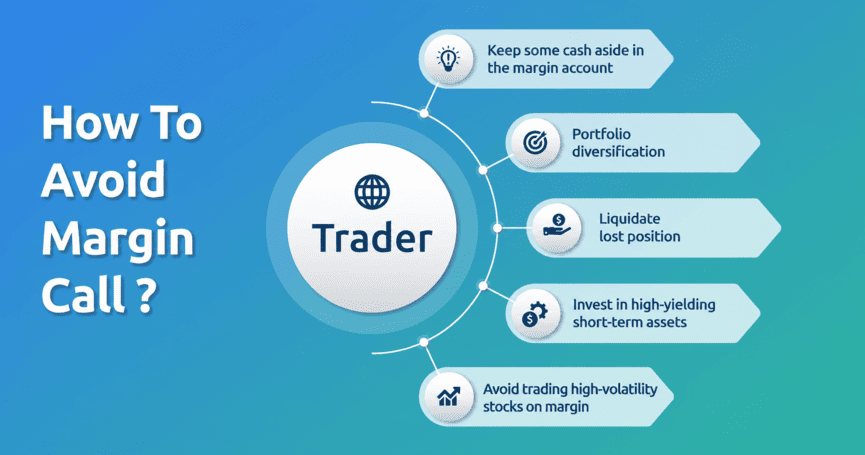
Strategies to Avoid Margin Calls
Use Leverage Conservatively
Just because your broker offers high leverage doesn't mean you need to use all of it. Using a small fraction of the available leverage dramatically reduces how far price needs to move against you before trouble starts, and is a core part of responsible leverage in trading.
Keep Extra Buffer Capital in Your Account
Running an account right at the minimum margin requirement leaves almost no room for normal price fluctuation. Keeping meaningfully more equity than the bare minimum required creates a cushion that absorbs volatility instead of triggering a call.
Monitor Margin Level, Not Just Account Balance
Account balance alone doesn't tell the full story once leverage is involved. Regularly checking your margin level — the ratio of equity to used margin — gives a much clearer, earlier warning sign than simply watching your balance shrink.
Apply Proper Position Sizing
This ties directly back to solid risk management in trading. Position sizes calculated based on a small, fixed percentage of account risk naturally keep margin usage far below dangerous levels, even during a string of losing trades.
Set Personal Stop-Outs Well Before the Broker's Threshold
Rather than waiting for your broker's automatic margin call level, set your own internal rule to close or reduce positions well before that point is ever reached. Being proactive here means you control the exit, not a forced liquidation at the worst possible price.
Practical Risk Management Tips for Margin Accounts
- Avoid holding maximum leverage into major news events. Volatility spikes are exactly when margin levels can deteriorate fastest.
- Diversify rather than concentrating leveraged positions in one direction. Multiple correlated leveraged trades can push margin usage far higher than it appears at first glance.
- Understand your broker's specific margin requirements. These vary by broker and instrument, so knowing your exact threshold in advance prevents unpleasant surprises.
- Review open positions daily, not just when something feels off. Margin levels can shift quickly during volatile sessions, and daily checks catch problems early.
Avoiding margin calls is a lot like maintaining a healthy credit score — nobody notices the disciplined habits behind it day to day, but everyone notices the moment those habits are ignored and the consequences show up all at once.
Common Mistakes That Lead to Margin Calls
- Using maximum available leverage on every trade. This leaves virtually no room for normal market fluctuation before trouble begins.
- Ignoring margin level in favor of watching unrealized profit and loss only. Margin level can deteriorate faster than raw balance suggests, especially with multiple open positions.
- Adding to a losing position to "average down" on margin. This increases exposure exactly when margin is already under pressure.
- Holding highly leveraged positions through major news events. Sudden volatility spikes are one of the most common margin call triggers.
- Assuming a margin call "won't happen to me." Overconfidence around leverage is one of the fastest ways to end up facing exactly that situation.
Conclusion
Understanding how to avoid margin calls really comes down to respecting leverage rather than maximizing it. Keep buffer capital in your account, size positions conservatively, monitor margin levels proactively, and set your own exit rules well before your broker ever needs to step in. A margin call is essentially your account's last warning system — the goal is never needing to hear it in the first place.
Trade the leverage you can handle calmly, not the maximum your broker happens to offer.
Frequently Asked Questions
1. What happens immediately after a margin call?
Your broker typically requires additional funds to be deposited quickly, or automatically closes some or all open positions to bring the account back within required margin levels.
2. Can a margin call happen even if I'm using a stop-loss?
Yes, particularly during fast-moving markets where slippage causes an exit at a worse price than planned, or when multiple positions are open simultaneously and combined exposure exceeds available margin.
3. Is high leverage always dangerous?
High leverage itself isn't automatically dangerous, but using a large portion of it without adequate buffer capital or proper position sizing significantly increases the risk of a margin call.
4. How much buffer capital should I keep above the minimum margin requirement?
There's no universal number, but keeping meaningfully more than the bare minimum required gives a cushion against normal volatility rather than trading right at the edge of a forced liquidation.